




What is islam
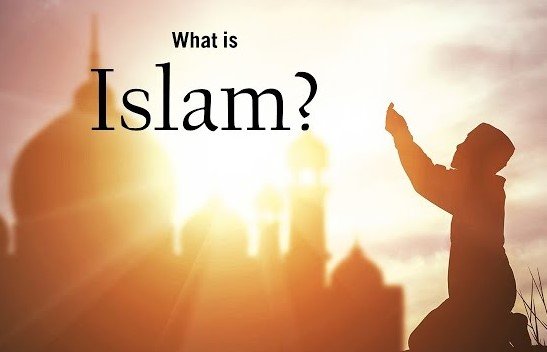
What is Islam
Islam is the Abrahamic monotheistic religion based on the Quran and the teachings of the Prophet Muhammad. The word "Islam" means "submission to the will of God" (Allah), and its followers, called Muslims, believe in one God and that Muhammad is his final prophet. It is the world's second-largest religion, with approximately 2 billion adherents globally.
Belief in One God
The most fundamental teaching of Islam is to believe in the Oneness of God, in the sense of His being the only Creator, Preserver, Nourisher, etc. But this belief is not enough. Many of the idolaters knew and believed that only the Supreme God could do all this and yet they associated other gods with Him. Therefore, one must acknowledge the fact that it is God alone who deserves to be worshipped, and thus abstain from worshipping any other thing or being. Likewise, Muslims believe that God has no father or mother, no son or daughter. None is equal to Him. He is God of all humankind, not of a special tribe or race.
Belief in Prophets
Belief in Divine Books About Islam
Belief in Angels
Belief in Judgement Day
Nemaz
History and Importance of Prayer (Namaz / Ṣalāh)
1. Historical Background of Prayer (Namaz)
a. Prayer before Islam
The concept of prayer existed even before the final message of Islam. Earlier prophets such as Ibrahim (Abraham), Musa (Moses), and Isa (Jesus) — peace be upon them — practiced forms of worship that involved bowing, prostration, and standing before God.
This shows that prayer has always been a part of monotheistic faith traditions.
b. Prayer in the early days of Islam
In the early years of Prophet Muhammad’s ﷺ mission in Makkah, Muslims prayed but not in the form or number that exists today.
These early prayers were simple acts of worship focused on remembering Allah (dhikr).
c. The Mi‘raj (Ascension) – Formal Establishment of Salah
The five daily prayers were officially made obligatory during the Night of Ascension (Isra and Mi‘raj).
According to Islamic tradition:
The Prophet ﷺ was taken on a miraculous journey from Makkah to Jerusalem (Isra).
Then he ascended to the heavens (Mi‘raj).
Allah directly ordained 50 prayers, which were ultimately reduced to five, with the reward remaining equal to fifty.
From that day onwards, Salah became a fixed and essential pillar of Islam.
d. Standardization in the Madinah period
After the Prophet ﷺ migrated to Madinah, the method, timings, and conditions of prayer became fully structured.
Key developments included:
The adhan (call to prayer) initiated by Bilal (RA).
The building of Masjid al-Nabawi where congregational prayers were held.
Instructions for performing Salah in detail.
This made prayer a central part of Muslim community life.
2. Importance of Prayer (Namaz / Salah)
Prayer is not only a ritual but a direct connection between the servant and the Creator.
It carries spiritual, moral, and social significance.
a. A Pillar of Islam
Salah is one of the Five Pillars of Islam.
The Prophet ﷺ said:
“Salah is the pillar of religion. Whoever establishes it has upheld the religion, and whoever abandons it has destroyed it.”
This highlights its foundational role in a Muslim’s faith.
b. A direct link with Allah
Unlike other forms of worship, prayer is a personal conversation with Allah.
It brings peace, focus, and spiritual clarity.
Muslims stand, bow, and prostrate in humility, recognizing Allah’s greatness and seeking His mercy.
c. Discipline and Time-Management
Praying five times a day teaches:
consistency
punctuality
self-control
mindfulness
This rhythm shapes a Muslim’s daily life around remembrance of God.
d. Purification of the Heart
Salah cleanses the soul from sins and negative habits.
The Prophet ﷺ compared prayer to bathing in a river five times a day — making the body clean and pure.
e. Moral and Character Development
Regular prayer makes a person more:
patient
grateful
humble
responsible
The Qur’an says that Salah prevents indecency and wrongdoing.
f. Community and Unity
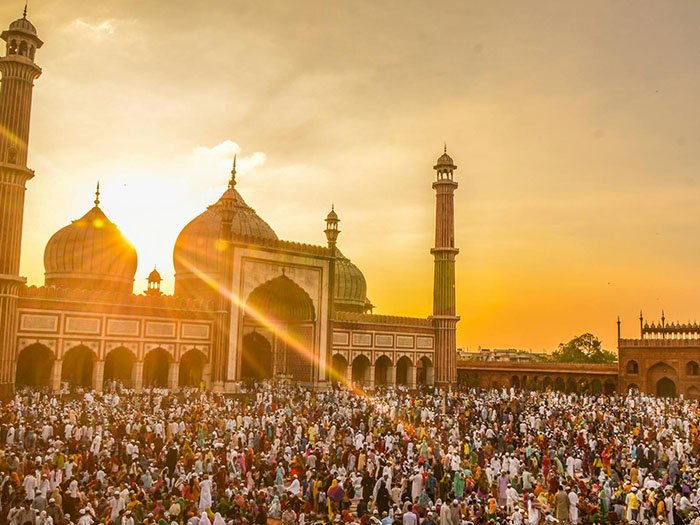
Congregational prayer (especially Jumu’ah) strengthens:
brotherhood
equality
unity
People of all backgrounds stand side by side without distinction, reminding believers of equality before Allah.
g. Spiritual Peace and Stress Relief
In a busy and stressful world, Salah provides mental calmness and emotional balance.
It centers the heart and mind on what truly matters.
Prayer Guide in English
![]()
Muslim Prayer guide produced by MUSLIMCONVERTS .COM
How to Pray Fajr Salah ( Morning prayer)
The Fajr salah is the first of the five obligatory Muslim prayers of the day.
Fajr Salah starts at dawn and ends at sunrise. Thus it can be prayed between these points. But it is best to pray at the beginning of its time (i.e. just after start of dawn)
Essentially what is said in all the 5 obligatory Muslim prayers is the same. The only difference is the different number of rakats (units) performed in each prayer and whether the first two rakats of a prayer are recited Audible or silently in one’s heart
The FAJR (morning) Prayer consists of 2 rakats, the DHUHR (Early Afternoon) Prayer and ASR (late afternoon ) prayer and ISHA ( night ) prayer all 4 consist rakats) and finally the MAGHRIB (sunset) prayer consists of 3 rakats).
The First 2 rakats of FAJR, MAGHRIB and ISHA prayers are recited loudly and the remaining rakats of these prayers are recited silently.
However all 4 rakaats of DHUHR and ASR prayer are recited silently
I suggest you print this out and practice holding the pages reciting what is there to be recited in their respective body positions.
Going through the motions repeatedly will help you learn quickly. Also look at the video and the flash movie as it will help you see the postures and movements. May Allah make it easy for you.
Note-
Males garments/pants should be above the ankles(unlike in the picture. Inshallah better diagrams will be made as soon as possible).
Women’s garment should be a forearms lower than her skins (measure your arm length , from elbow to longest finger, if this is say is 45 cm, ) then form your skins and ) thus her feet will Women are NOT supposed to pray when they are menstruating and experiencing post-childbirth bleeding.
Abstaining from prayers for a women experiencing post-childbirth bleeding is a maximum of forty (40) days. If her bleeding stops before the 40 days she must make ghusl and start praying.
Also at the end of her menstruation she must make ghusl and begin her prayers.
Before prayer one must perform Ablution
How to perform Ablution (Wudhu)
Just before Prayer
Establishing the Sutrah (A Tall Object About The Height Of A Saddle, Just Beyond the Place of Prostration, Within Which Nothing Should Pass)
Place anything (about the height of a saddle) just beyond the place of prostration. Things that can be used are: a wall, bed, tall pillow, tall purse, tall stick, tree, etc. Anything that breaks the path between the person praying and someone who “may” need to pass in front. It’s best to pray facing a wall, bed, or any other type of tall object, so that there will be no need for someone to pass directly in front. Do not mind anyone who passes beyond the sutrah.
The Prophet (SAW) said, “Do not pray except towards a sutrah, and do not let anyone pass in front of you, but if someone continues (to try to pass) then fight him, for he has a companion (i.e. a Shaitan) with him.” (Sahih – Al-Bukhari and Ahmad)
“When he (SAW) prayed (in an open space where there was nothing to use as a sutrah) he would plant a spear in the ground in front of him and pray towards it with the people behind him.” (Sahih – Al-Bukhari and Muslim)
The Prophet (SAW) said, “When one of you places in front of him something such as the stick on the end of a saddle, he should pray and not mind anyone who passes beyond it.” (Sahih – Muslim and Abu Dawood)
Prayer Guide in Urdu
Ramzan
The Beauty of Islam: A Comprehensive Guide for Muslims and Seekers of Knowledge
Islam is a universal religion built on peace, submission to Allah, and compassion for all creation. As one of the world’s fastest-growing faiths, Islam provides a complete way of life—spiritually, socially, and morally. In today’s digital age, many people turn to Islamic websites to learn about the Qur’an, Hadith, Islamic history, prayer guides, and practical tips for living a life that pleases Allah. This article explores the foundations of Islam, its core beliefs, and how Muslims can deepen their connection with their faith.
What Is Islam?
Islam means submission to the will of Allah. A person who follows Islam is called a Muslim, which means “one who submits.” The message of Islam is simple: Allah is One, and Prophet Muhammad (peace be upon him) is His final Messenger. Muslims believe in a line of prophets including Adam, Noah, Abraham, Moses, and Jesus (peace be upon them all), making Islam a continuation of earlier monotheistic faiths.
Core Islamic Beliefs (Aqidah)
Every Muslim believes in the following six pillars of faith:
Belief in Allah (Tawheed)
Belief in Angels
Belief in the Revealed Books
Belief in the Messengers
Belief in the Day of Judgment
Belief in Divine Decree (Qadr)
These beliefs form the foundation of a Muslim’s spiritual journey.
The Five Pillars of Islam
The practice of Islam stands on five pillars that shape daily life:
1. Shahadah (Declaration of Faith)
The testimony “Lā ilāha illa Allāh, Muhammadur Rasūl Allāh” expresses the heart of Islam and is the key to entering the faith.
2. Salah (Prayer)
Muslims pray five times a day to connect with Allah, find peace, and remain mindful. Salah teaches discipline, humility, and gratitude.
3. Zakat (Charity)
Zakat purifies one’s wealth and supports the poor. It strengthens community bonds and reminds Muslims that every blessing is a trust from Allah.
4. Sawm (Fasting in Ramadan)
During the holy month of Ramadan, Muslims fast from dawn to sunset, developing self-control, empathy, and spiritual growth.
5. Hajj (Pilgrimage to Makkah)
The pilgrimage is a profound journey of worship performed once in a lifetime if one is able.
The Qur’an: Guidance for Humanity
The Qur’an is the final revelation from Allah, preserved in its original form. Muslims recite it daily and reflect on its meanings to strengthen their faith. Islamic websites play an important role by offering:
Qur’an translations
Tafsir (explanations)
Tajweed lessons
Audio recitations
Studying the Qur’an brings peace, clarity, and purpose to life.
The Importance of Sunnah and Hadith
The Sunnah of Prophet Muhammad (PBUH) shows how to apply the teachings of the Qur’an in daily life. His character—filled with mercy, patience, honesty, and generosity—is a model for all Muslims. Hadith collections help Muslims understand prayer, ethics, family matters, manners, and spiritual development.
Islamic Lifestyle and Daily Worship
A true Islamic lifestyle extends beyond rituals. It includes:
Good manners (Akhlaq)
Respect for parents
Honesty in financial dealings
Kindness to neighbors
Seeking beneficial knowledge
Modesty in behavior and dress
These qualities reflect the beauty of the Islamic way of life.
Why Islamic Knowledge Is Important Today
In a world filled with distractions, misinformation, and challenges, learning authentic Islamic knowledge is crucial. Islamic websites help Muslims and non-Muslims access reliable information, including:
How to pray correctly
Duas for daily life
Articles on Islamic history
Marriage and family guidance
Halal and haram rulings
Inspirational stories of the prophets
Knowledge brings confidence, spiritual strength, and closeness to Allah.
Benefits of Following Islamic Teachings
Living by Islamic principles brings countless benefits:
1. Inner Peace and Spiritual Fulfillment
Islam teaches remembrance of Allah (Dhikr), which calms the heart and removes anxiety.
2. Strong Moral Character
Muslims strive to be truthful, patient, and fair, building a trustworthy society.
3. Healthy Relationships
Islam emphasizes kindness in marriage, respect for parents, and responsibility towards children.
4. Social Justice
Teachings of charity, fairness, and compassion uplift entire communities.
5. A Balanced Life
Islam encourages moderation in eating, sleeping, spending, and worship.
Islam for New Muslims and Seekers
Many people discover Islam through online platforms. Islamic websites provide beginner-friendly resources such as:
Introduction to Islamic beliefs
Step-by-step prayer guides
Videos on how to perform ablution
Articles on the Prophet’s life
Support groups for new Muslims
Islam welcomes everyone with peace. Every small step toward Allah is rewarded.
Conclusion: Islam—A Path of Peace and Purpose
Islam is not just a religion; it is a complete guide for living with purpose, compassion, and dignity. From the Qur’an to the Sunnah, from daily prayers to acts of kindness—Islam shapes a believer’s character and strengthens their connection with Allah.
As Islamic knowledge becomes more accessible online, Muslim communities worldwide are better equipped to deepen their faith and live meaningful, fulfilling lives. Whether you are a lifelong Muslim or someone curious about Islam, the journey of learning is a beautiful step toward truth, peace, and spiritual success.


Ruku


